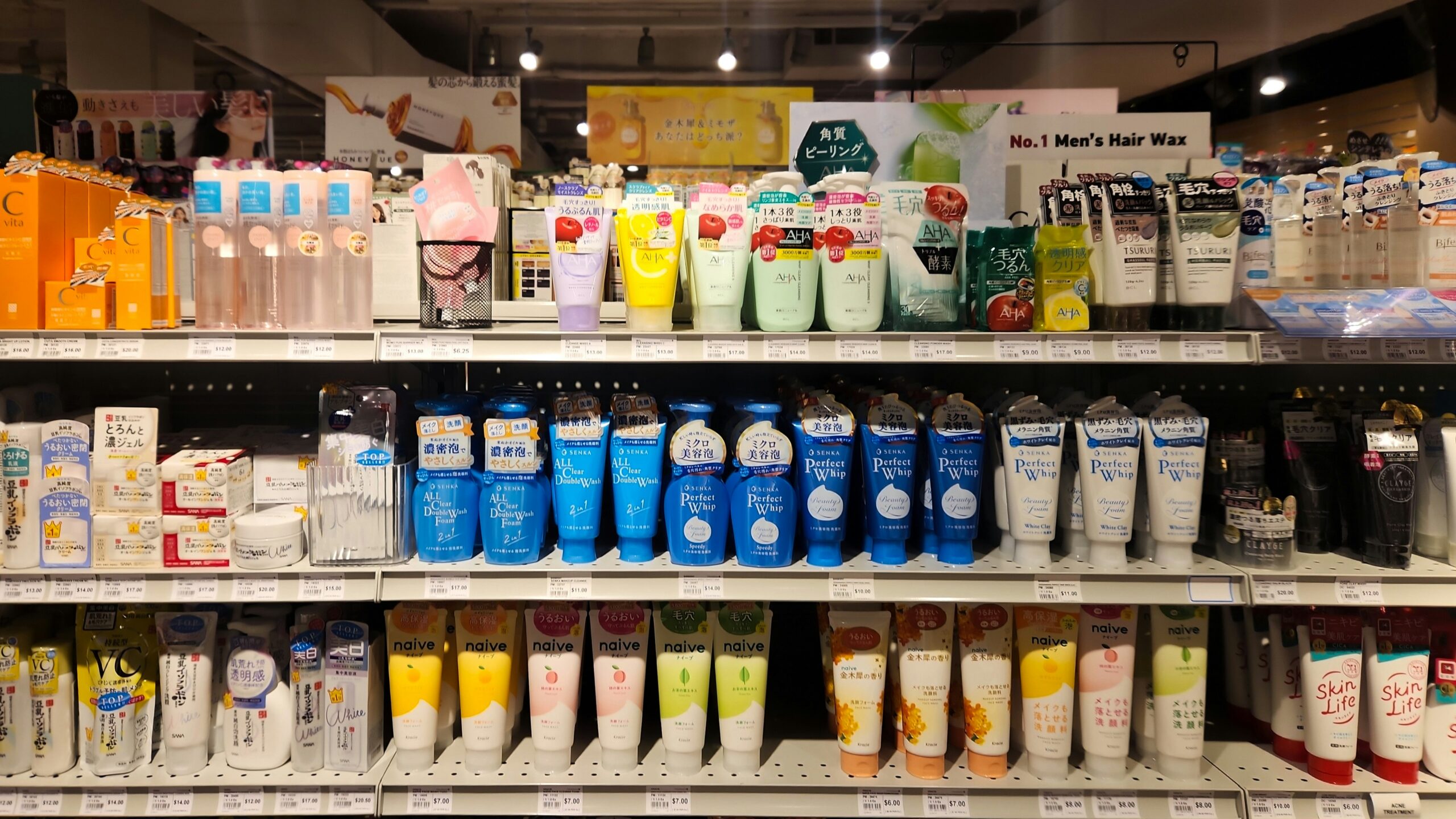
Floor-to-ceiling shelves packed with colour-coded packaging, handwritten recommendation cards (POPs, they call them), and multiple versions of products you’ve never heard of. You want to grab something amazing, but where do you even start when you can’t read half the labels and there’s just so much choice?
Here’s what I can share: After spending my early twenties in Japan testing everything from ¥500 drugstore finds to luxury department store splurges—and still updating my collection every time I fly back—I’ve figured out what’s genuinely worth your suitcase space. This isn’t about what’s trending on TikTok this week. These are products Japanese women have been quietly repurchasing for years, the kind that sell out within days when new shades drop.
In this guide, you’ll discover:
- 10 tried-and-tested Japanese beauty products that I actually use (I have combination skin and I’m in my late 30s, for reference)
- The beauty magazines that might help you navigate Japan’s cosmetics landscape
- Where to actually find these products when you’re in Japan
Quick Take
- Japanese beauty focuses on enhancing your natural features rather than dramatic transformation
- Some of the best products aren’t the most expensive—certain drugstore finds genuinely outperform luxury brands
- Beauty magazines come with generous sample bundles that can be worth the purchase alone
Quick note: This post contains affiliate links to Amazon. If you purchase through these links, I may earn a small commission at no extra cost to you—it helps support Refined Japan and lets me keep sharing these cultural deep dives. I only recommend products I genuinely use and love!
What Makes Japanese Beauty Different?
Japanese beauty philosophy centres on something called supin (素肌) —literally “bare skin,” but really it’s about nurturing skin so healthy that makeup becomes a choice, not a necessity.
While Western makeup culture often celebrates bold transformation (contouring! cut creases! dramatic before-and-afters!), Japanese beauty tends towards subtlety. The goal isn’t “look at my makeup,” it’s more “wow, her skin looks great” or “are her lashes naturally that long?”
This philosophy shows up in product design:
- Base makeup: Dewy, skin-like finishes rather than full-coverage matte
- Innovation focus: Sunscreen that doesn’t feel like sunscreen, mascara that survives anything but removes easily
- Long-game thinking: Products designed for daily use over decades, not quick fixes
The beauty market reflects this too. New products launch constantly (seriously, monthly), but there’s also this concept of dendō-iri (殿堂入り)—”hall of fame” products that have proven themselves over 10, 20, even 30 years. Those are the ones I tend to gravitate towards.
The Cultural Bridge: Why Japanese Beauty Hits Different
The incremental improvement mindset
Living in New Zealand now, I notice the difference. We have this brilliant “she’ll be right” attitude here—good enough is genuinely good enough. Japanese beauty culture operates quite differently. There’s this persistent drive for incremental improvement that can feel almost intense.
Take sunscreen. Here in NZ, we’re pretty serious about sun protection—SPF 50+ is standard because our UV levels are brutal. But Japanese sunscreen innovation goes beyond just SPF numbers. They’ve created SPF 50+ formulas that feel like water, have no scent, work beautifully under makeup, and somehow also moisturise your skin. It’s not that one approach is better, just… different priorities, I suppose.
The skincare-meets-makeup philosophy
Growing up in Japan, I didn’t really question this, but looking back now: Japanese beauty products often blur the line between skincare and makeup in interesting ways.
My UV base from Excel? It’s 89% serum. My mascara has eyelash conditioning ingredients. Even my eyebrow mascara—which I’ve been using since university—colours my brows, stays put all day, and washes off easily with regular cleanser.
It’s not that the boundary between skincare and makeup doesn’t exist, but rather that makeup is seen as an extension of skincare. You’re still caring for your skin whilst adding colour or coverage. The philosophy seems to be: why choose between the two when you can do both? Western brands are definitely catching on to this approach now too, with more beauty-infused makeup hitting the market.
The longevity thing
Japanese cosmetics tend to stick around if they’re good. Remember how I mentioned dendō-iri products? Some of these have been bestsellers since 2008.
I think it’s because Japanese consumers are quite loyal—but you earn that loyalty by being consistently reliable. There’s perhaps less tolerance for gimmicks and more appreciation for products that just… work, every single time, for years.
When I mention Heavy Rotation’s eyebrow mascara below, I genuinely can’t count how many tubes I’ve purchased. University, first job, moving abroad, return visits—it’s been there through everything because it’s never once disappointed me.
My Top 10 Japanese Beauty Essentials
Quick note: These are just my personal favourites based on my own skin and preferences. Your mileage may vary, but hopefully this gives you a starting point!
The Lip That Survived a Pandemic
1. KATE Lip Monster
When this launched in 2021, Japan was deep in mask-wearing culture. KATE somehow created a lipstick that actually doesn’t transfer—properly doesn’t transfer.
I bought it quite sceptically (I’d heard “transfer-proof” claims before). One application later, I was sold. The colours are lovely, it genuinely stays put through meals and masks, and—here’s what surprised me—it doesn’t dry out my lips at all.
Perfect for people like me who basically never touch up makeup during the day.
Where to find it: Any drugstore, around ¥1,500-1,600
The Bases That Replace Foundation
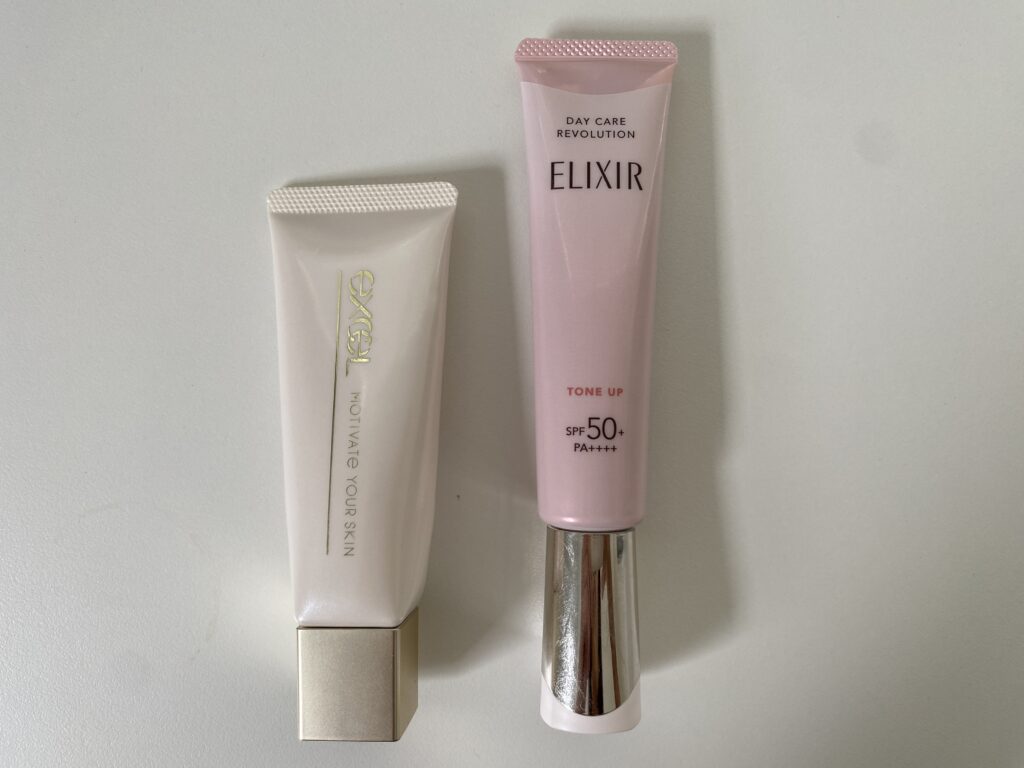
2. Elixir Day Care Revolution Tone Up SP+
I stopped wearing foundation years ago in favour of really good UV bases. This one from Elixir (a Shiseido brand) is what I reach for when I want to look polished but natural.
Japanese beauty guru Hiro Odagiri recommends it, and I can see why: it evens out skin tone, blurs pores a bit, and doesn’t budge or get greasy even after a full day. A little goes quite far, so despite the slightly higher price point (around ¥2,000), I find it economical.
The feel: Watery, lightweight, gives a fresh-faced glow
3. Excel Motivate Your Skin
If Elixir is a silk slip, Excel is more like a cashmere jumper—a bit more coverage, a bit more nurturing.
At 89% serum, this barely feels like makeup. It’s available in two shades (pink-toned and beige-toned), offers more coverage than Elixir, and has this lovely creamy texture that feels quite pampering.
The feel: Skincare that happens to have SPF and colour-correcting benefits
Where to find them: Drugstores, LOFT, department stores
The Brow Product I’ve Repurchased Since 2008
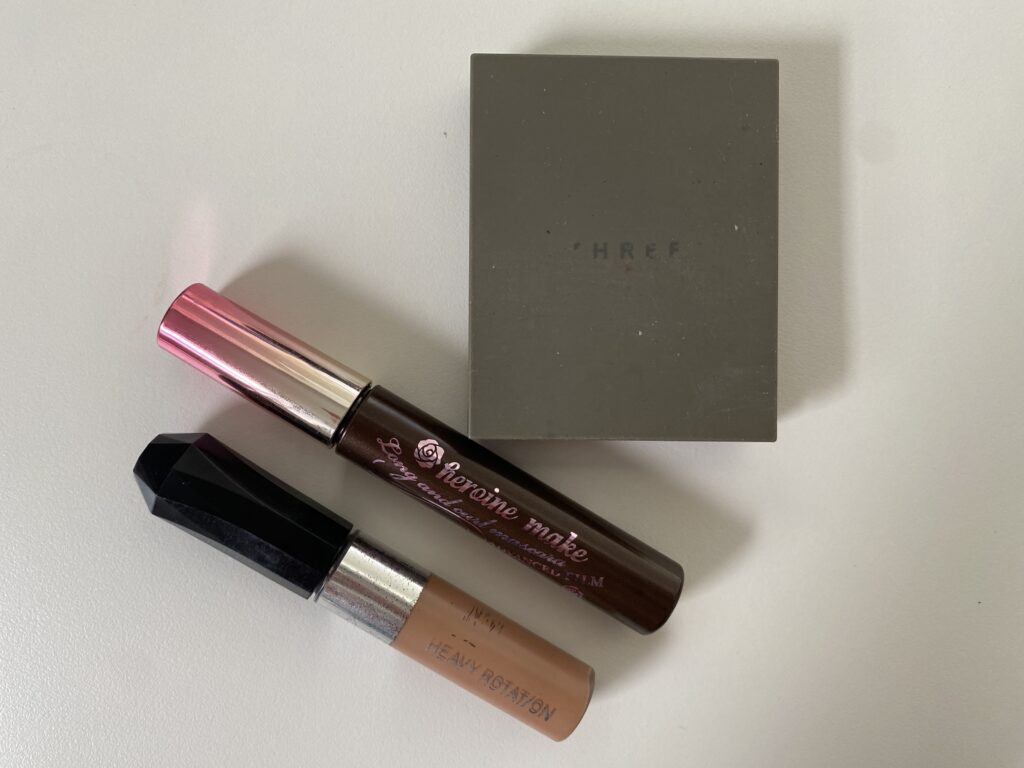
4. Heavy Rotation Colouring Eyebrow
If you colour your hair, you probably want brow mascara that matches. This has been a cult favourite eyebrow mascara in Japan since it launched in 2008.
I’ve tried switching to other brands a few times. I always come back. It thoroughly coats each brow hair without clumping, the colour actually transforms your brows (not just tints them slightly), it lasts all day, and yet removes easily with regular cleanser. The colour range is extensive enough that you’ll likely find your match.
Price: Around ¥900
How long I’ve been loyal: 15+ years and counting
The Mascara That Defies Physics
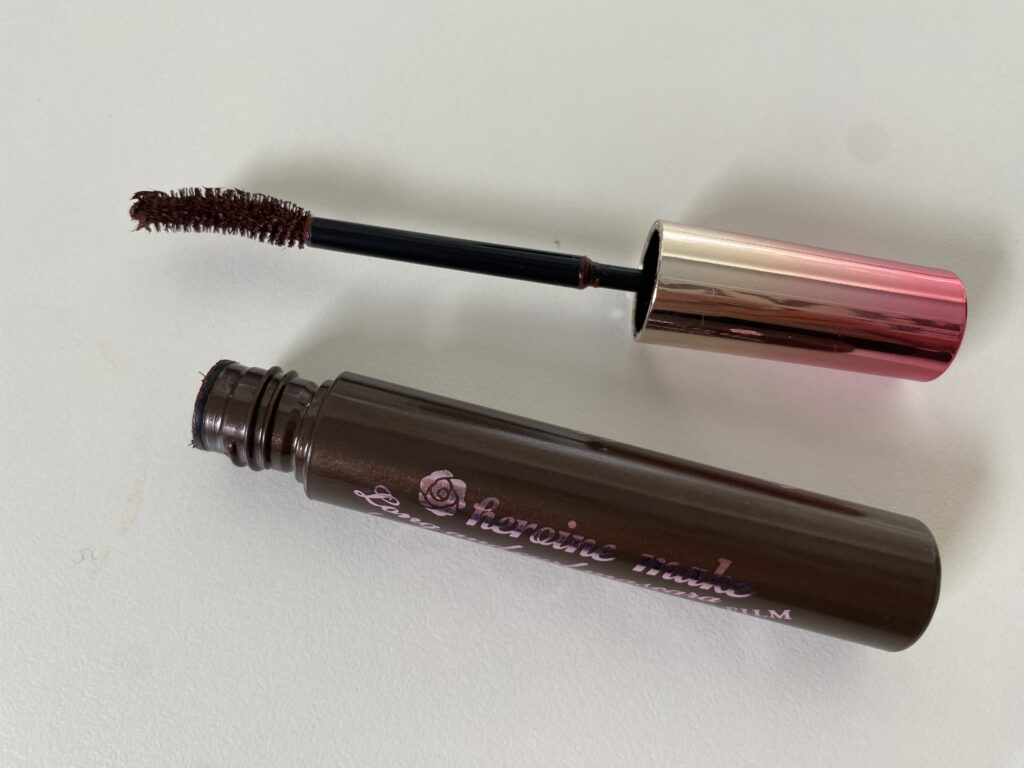
5. Heroine Make Long and Curl Mascara Advanced Film
Same parent company as Heavy Rotation (a heritage brand called Isehan, founded way back in 1825!), but you’d never guess from the packaging—it features this vintage manga-style princess that looks quite teenage.
Don’t let that fool you, though.
This mascara is beloved across generations, and I can see why:
- Doesn’t clump
- Lengthens considerably (people have asked if I’m wearing falsies)
- Holds curl from morning until night
- Survives crying, sweating, laughing—basically, life
- Removes easily despite being waterproof
- Costs around ¥1,000
I buy multiple tubes every Japan trip. It’s become non-negotiable luggage space for me.
The Glow-Up You Can See From Across the Room
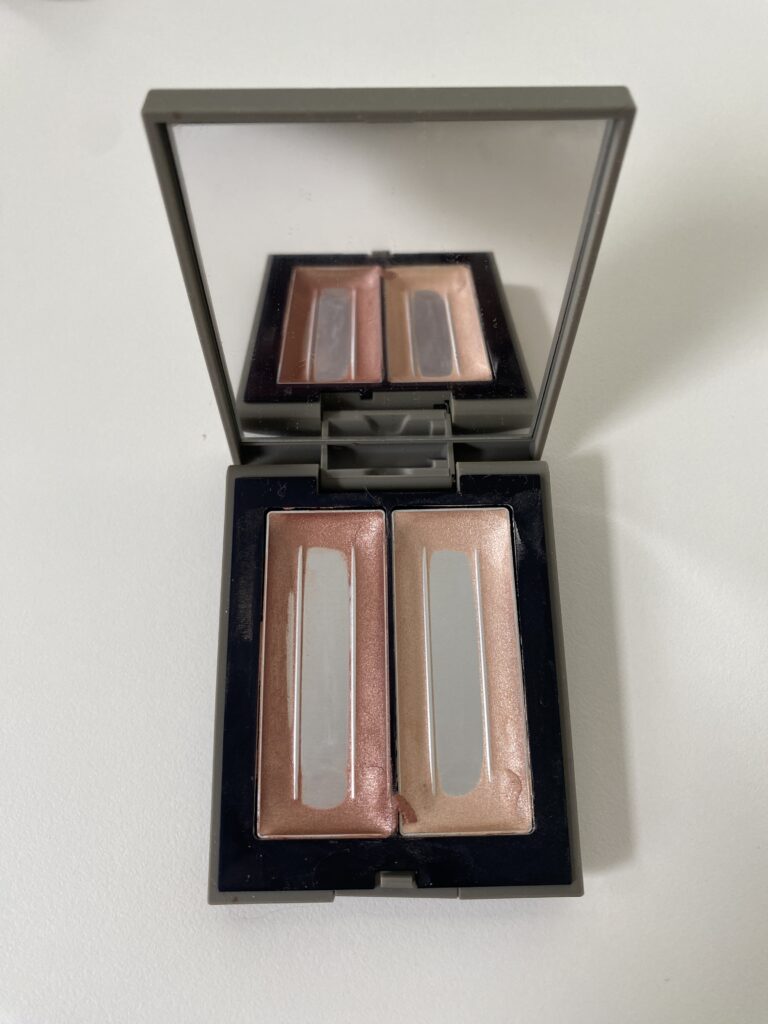
6. THREE Shimmering Glow Duo
Right, so we’re jumping from drugstore to department store (depāto kosume or “depa-cos” in Japanese), and yes, this costs more (around ¥5,000). But I wanted to include it because it’s genuinely special.
THREE is a holistic, natural Japanese brand focusing on organic and domestic ingredients. This duo—highlighter on one side, contour on the other—just makes skin look really, really good. Like, “what’s your skincare routine?” good when really it’s just strategic shimmer placement.
The difference between wearing this and not wearing it is quite noticeable to me. I use it on my eyelids sometimes too.
Worth considering if: You’re after one luxury purchase and want something versatile
The Eyeshadow That Made Me Understand Depa-Cos
7. SUQQU Signature Colour Eyes
A friend’s eye makeup looked so stunning one day that I stopped mid-conversation to ask what she was wearing. This was it.
The colour payoff is lovely—vibrant without being harsh. The shimmer is sophisticated rather than glittery. And whilst drugstore brands make excellent eyeshadows, there’s something about SUQQU’s formula that just feels a bit more luxurious.
Price: Around ¥7,700
Worth it if: You want that elevated finish
The Lash Serum That Gets Compliments
8. DHC Eyelash Tonic
Another DHC hall-of-famer (it’s been a bestseller for 20+ years). This lash serum actually works—but you do need patience.
The texture adheres well to lashes, the brush makes application easy, and with consistent use, you should see results. People compliment my lashes quite regularly, and they’ve become noticeably longer, thicker, and less prone to falling out.
The commitment: Daily application
The payoff: Genuinely healthier-looking lashes
The Lip Balm That Actually Works
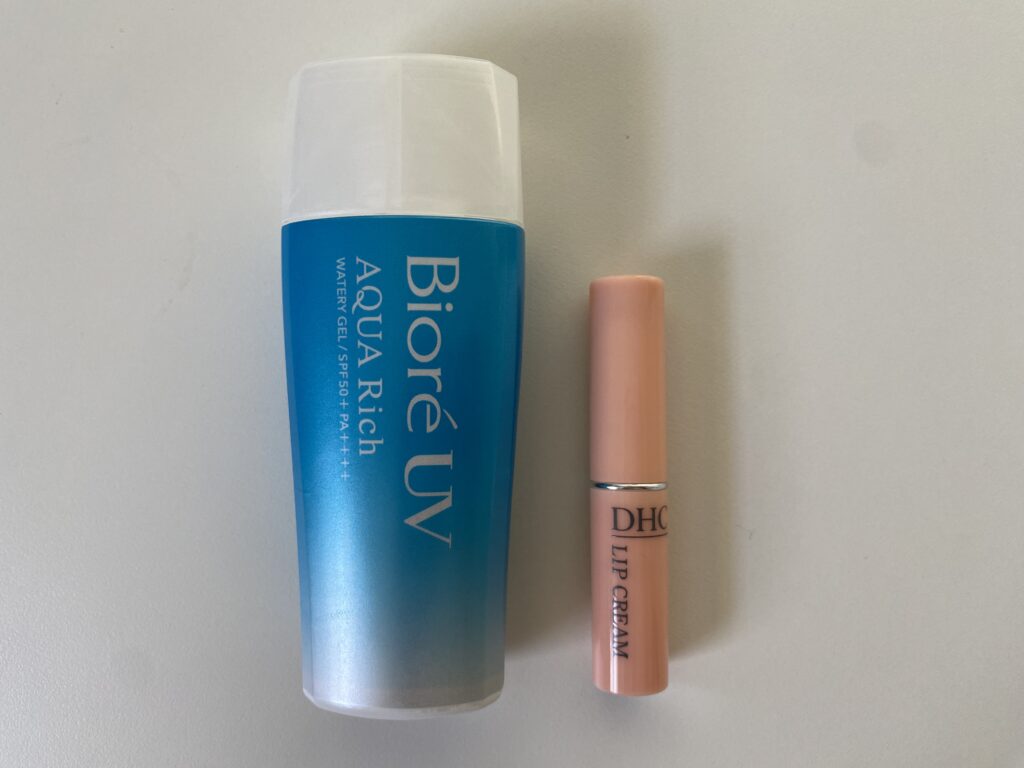
9. DHC Medicated Lip Cream
I need my lips constantly moisturised, and most lip balms either don’t last or actually make things worse (looking at you, products that cause peeling).
This one is unscented, non-greasy, deeply hydrating, and works beautifully under lipstick or gloss. It’s a bit pricier than your average drugstore lip balm (around ¥770), but I think the performance justifies it.
The Sunscreen That Doesn’t Feel Like Sunscreen
10. Biore UV Aqua Rich
Japan’s sunscreen game is impressive. Among the many options, Biore’s UV Aqua Rich series is what I use daily.
SPF 50, quite affordable (around ¥800), available everywhere, and here’s what I love: it feels like nothing. No sunscreen smell, no white cast, no greasiness, no interference with makeup layered on top.
I’ve been repurchasing the Watery Gel version for value, but honestly want to try every variant in the lineup.
For face and body: Yes
For Japanese summer humidity: Definitely yes
The Beauty Magazines Worth Your Coffee Money
1. The Big Three: Biteki, MAQUIA, Voce
These are Japan’s major beauty magazines, all targeting women in their 20s-30s.
What you get:
- Product recommendations and reviews
- Professional makeup tutorials
- Beauty expert Q&As solving reader concerns
- The best part: Generous sample bundles as furoku (附録/freebies)
Sometimes the freebies are genuinely luxe—people buy the magazine specifically for them. We’re talking full-size samples, branded pouches, skincare trial sets, that sort of thing.
2. CYAN: The Art Book Disguised as a Magazine
If you’re more visual than verbal, CYAN might be your thing. This beauty + fashion magazine prioritises stunning photography over text-heavy articles, making it enjoyable even if you don’t read Japanese.
It’s almost more art book than magazine—the kind you might display on your coffee table.
Note: There’s also CYANMAN for male readers.
3. ar: For the Dreamy Aesthetic
“Kawaii but sexy adult girl” is such a specifically Japanese concept, and ar embodies it quite well.
If you’re drawn to that soft, feminine, slightly whimsical aesthetic—think floaty fabrics, gentle makeup, dreamy styling—this magazine captures that vibe.
4. LDK the Beauty: The Myth-Buster
This one’s different. Instead of just promoting products, LDK actually tests them and publishes quite honest reviews.
Useful for answering questions like:
- “This product is hyped, but is it actually good?”
- “I don’t want to waste money—what really works?”
It’s a bit like having a sceptical friend who’s already tried everything and will give you the honest truth.
Where to Actually Buy These Products
Drugstores (Matsumoto Kiyoshi, Cocokara Fine, Sundrug, etc.)
- Most affordable option
- Best for: KATE, Heavy Rotation, Heroine Make, Excel, Biore, DHC
Department Store Cosmetics Floors (Usually first floor)
- Premium brands and personalised service
- Best for: THREE, SUQQU, Elixir
Variety Stores (LOFT, Tokyu Hands, Plaza)
- Curated selection, fun browsing experience
- Good for: Mix of drugstore and mid-range brands
@cosme Store
- Japan’s beauty review platform’s physical stores
- Best for: Discovering trending and hall-of-fame products
Amazon Japan
- Convenient, ships to hotels
- Best for: Stocking up if you’re short on time
Conclusion
Japanese beauty isn’t really about following trends blindly—it’s more about finding what genuinely works for you and sticking with it until something demonstrably better comes along.
My collection has evolved over the past decade or so, but several products (hello, Heavy Rotation and Heroine Make) have stuck around since my university days simply because they’ve never let me down. That’s the Japanese beauty philosophy in action, I suppose: consistent quality that earns long-term loyalty.
So here’s my question for you: What’s the one beauty product you’ve been repurchasing for years? And if you try any of these Japanese products, I’d be curious to know which one you’re most interested in.
Feel free to drop a comment below, and if this guide helped you navigate Japan’s beauty landscape at all, maybe share it with a friend planning their Tokyo drugstore adventure!
Fancy exploring more Japanese magazines?
If you enjoyed learning about beauty magazines, you might like my guide to Japanese fashion and culture magazines—they’re equally addictive,
I promise.