
Let me be honest with you about something first.
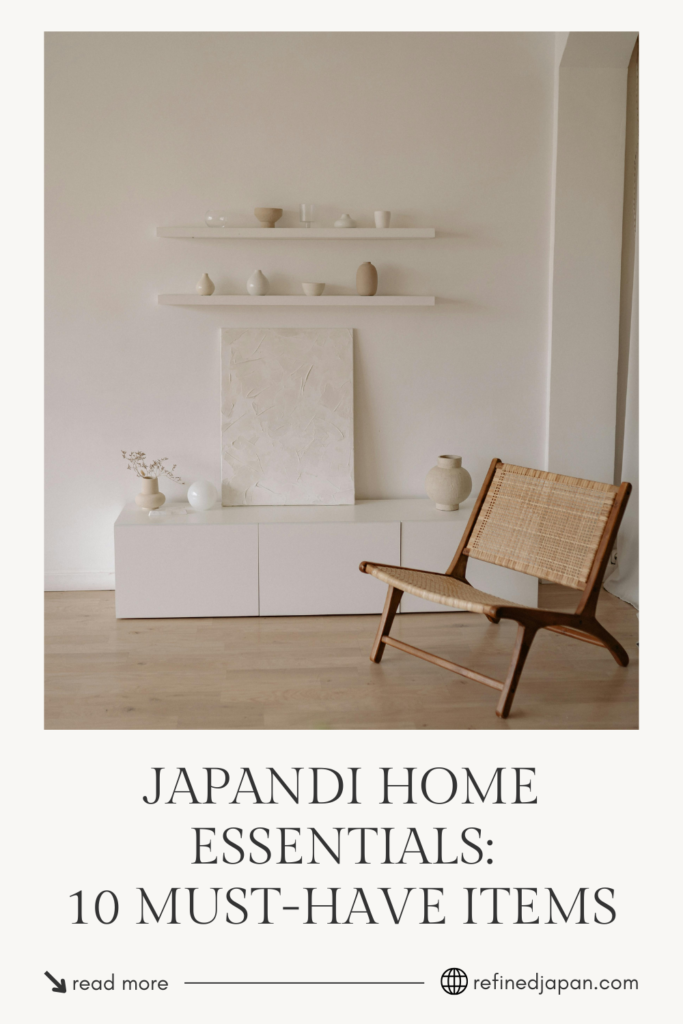
Japandi isn’t really a Japanese concept. It’s a word that was coined outside Japan — a blend of Japanese and Scandinavian aesthetics, filtered through a Western design lens and turned into a mood board trend. If you asked most people in Japan what “Japandi” means, they’d look at you blankly.
That said, I don’t think that makes it worthless. As a Japanese person living in New Zealand, I’ve come to see Japandi as a useful entry point — a way for people who love clean lines and natural materials to start noticing what makes Japanese design interesting. It’s just not the whole picture. Real Japanese aesthetics is messier, more contradictory, and honestly more interesting than the curated beige-and-wood version you see on Pinterest.
But if Japandi is the door, I’m happy to help you walk through it. These 10 objects are my personal picks — a mix of things I rely on every day and those that are still sitting firmly at the top of my own wishlist. I’ve chosen them because they’re genuinely rooted in Japanese craft and daily life, not just because they photograph well.
Quick Take
- Japandi is an external label: It’s a Western fusion, but it serves as a great bridge to deeper Japanese craft.
- Philosophy over Pinterest: Real Japanese design values the quiet philosophy of wabi-sabi and ma over simple “rustic” styling.
- My Curated List: A collection of items I either swear by or am currently saving up for, all from a Japanese insider’s perspective.
What Japandi Actually Gets Right
Before the list, it’s worth understanding what Japandi borrows from Japan — and what it leaves out.
What it gets right: the preference for natural materials, the restraint, and the idea that everyday objects can be worth caring about. These are genuinely Japanese instincts, and they show up in the objects below.
What it simplifies: wabi-sabi gets reduced to “rustic textures,” ma becomes “empty shelf space,” and the result can feel more like an aesthetic than a philosophy. The real versions of these concepts are quieter and less decorative than their Japandi interpretations. Keep that in mind as you shop. The goal isn’t to create a “Japandi room” — it’s to bring objects into your home that you actually find beautiful and useful.
10 Japanese Objects Worth Having
Living Room & Bedroom
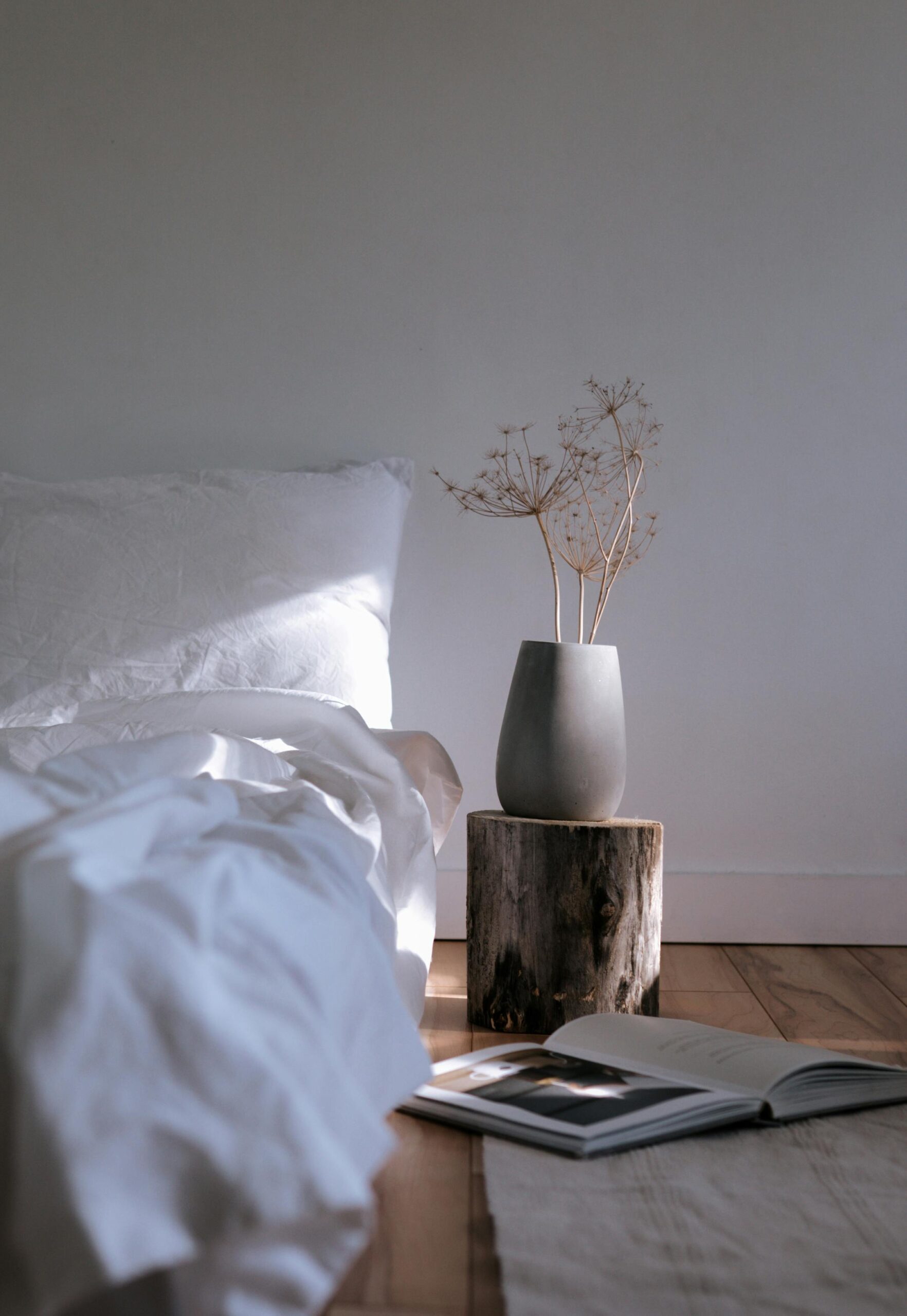
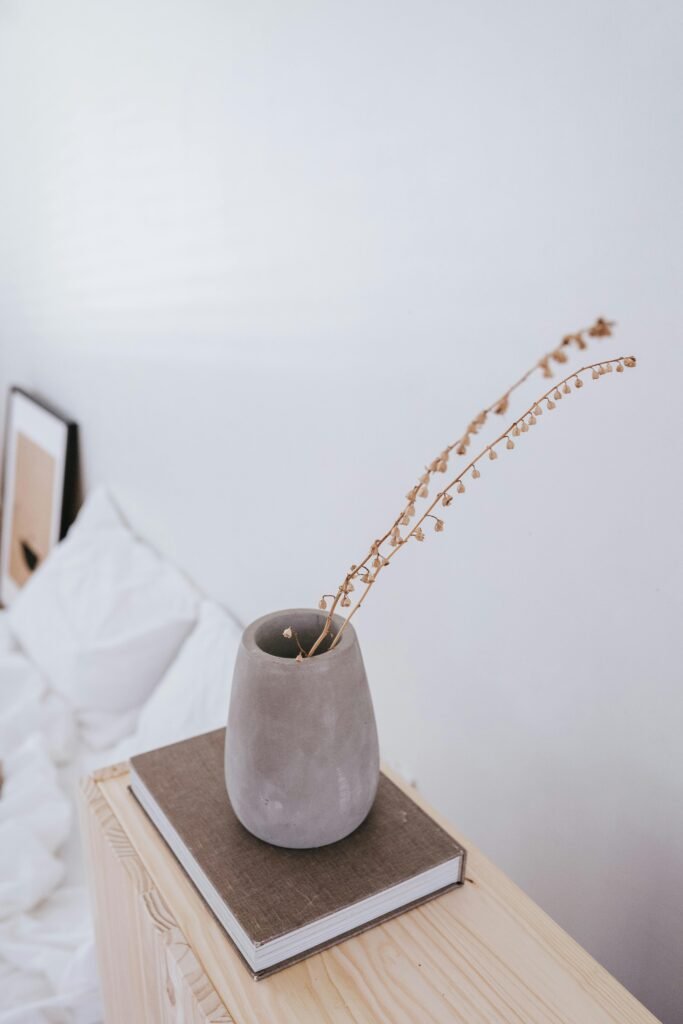
1. Ceramic Vase with Seasonal Branches
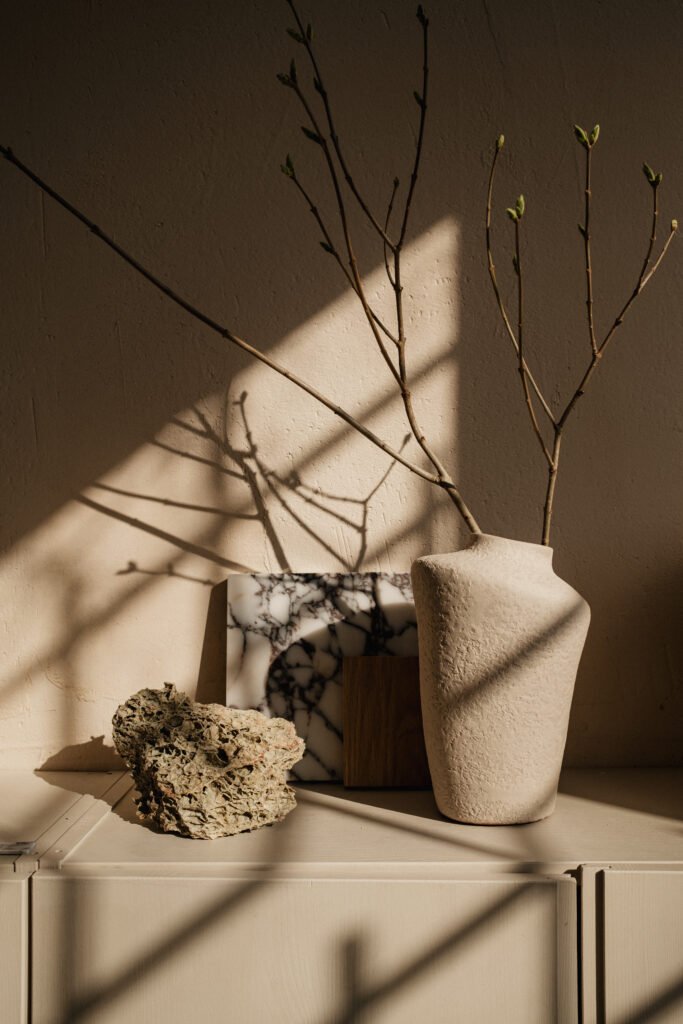
Decorating with branches (edamono) is having a moment in Japan, and I think it’s because it solves something that cut flowers don’t. Branches last longer and change with the seasons in a way that feels genuinely connected to what’s happening outside.
Right now, dōdan tsutsuji (Japanese enkianthus), forsythia, and wild rose branches are particularly popular. A single branch in a simple ceramic vase does more for a room than most decorative objects twice the price. You don’t need a Japanese vase specifically, but a handmade one with some weight and irregularity will hold its own against the branch rather than disappearing.
2. Washi Paper Lamp
Washi is made using a traditional technique called nagashi-zuki — a hand-papermaking method where long fibres are layered to give the paper extraordinary strength. Properly made washi is said to last a thousand years, which puts most modern materials to shame.
For a lamp, this means the light comes through differently — softer and more diffuse, without the harshness of a bare bulb. It’s the same quality of light you find in rooms with shoji screens. If you want one object that shifts the entire atmosphere of a room, a washi pendant light is probably it.
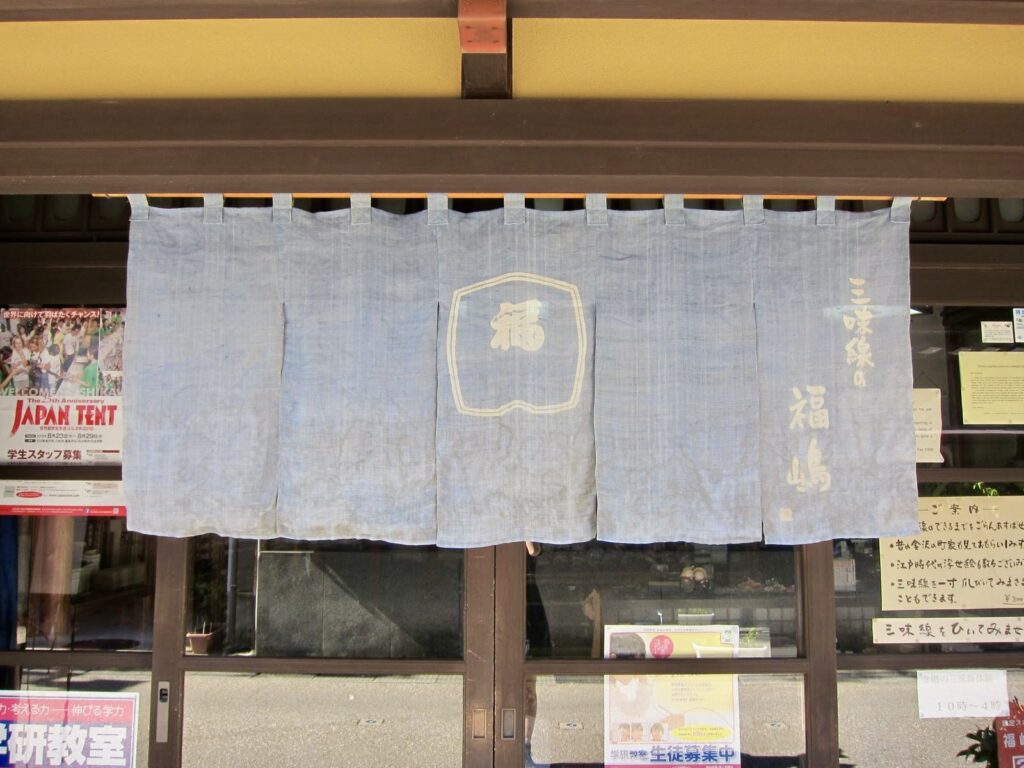
3. Noren
A noren is a split fabric panel, and it has been a fixture of Japanese domestic life for centuries. My grandmother still has one hanging in her house, which is how I think of it: not as a design trend, but as something that has simply always been there.
As a room divider, a noren does something a door or curtain doesn’t — it suggests separation without creating it. Light comes through, air moves, and the space breathes. For an open-plan apartment or a doorway you want to soften, it’s one of the most practical solutions I know of.
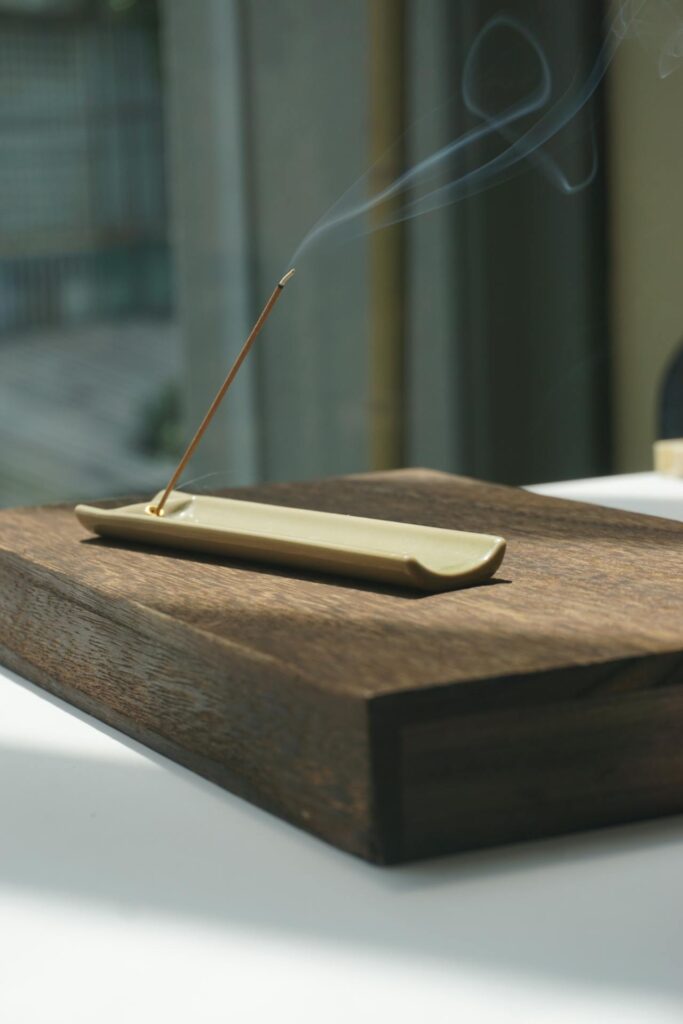
4. Japanese Incense and Holder
This is one of my personal favourites. It belongs on this list because it’s the only one that works through scent rather than sight.
There’s something particular about the way time moves when incense is burning; it slows down, slightly. In Japan, this is completely ordinary — part of daily life rather than a ceremony. Outside Japan, it tends to get treated as something special, which I think is the right instinct even if the reasoning is different. My preferences are sandalwood (byakudan) and hinoki cypress. A well-made ceramic or metal holder is a small, beautiful object in its own right.
5. Wood-Framed Round Mirror
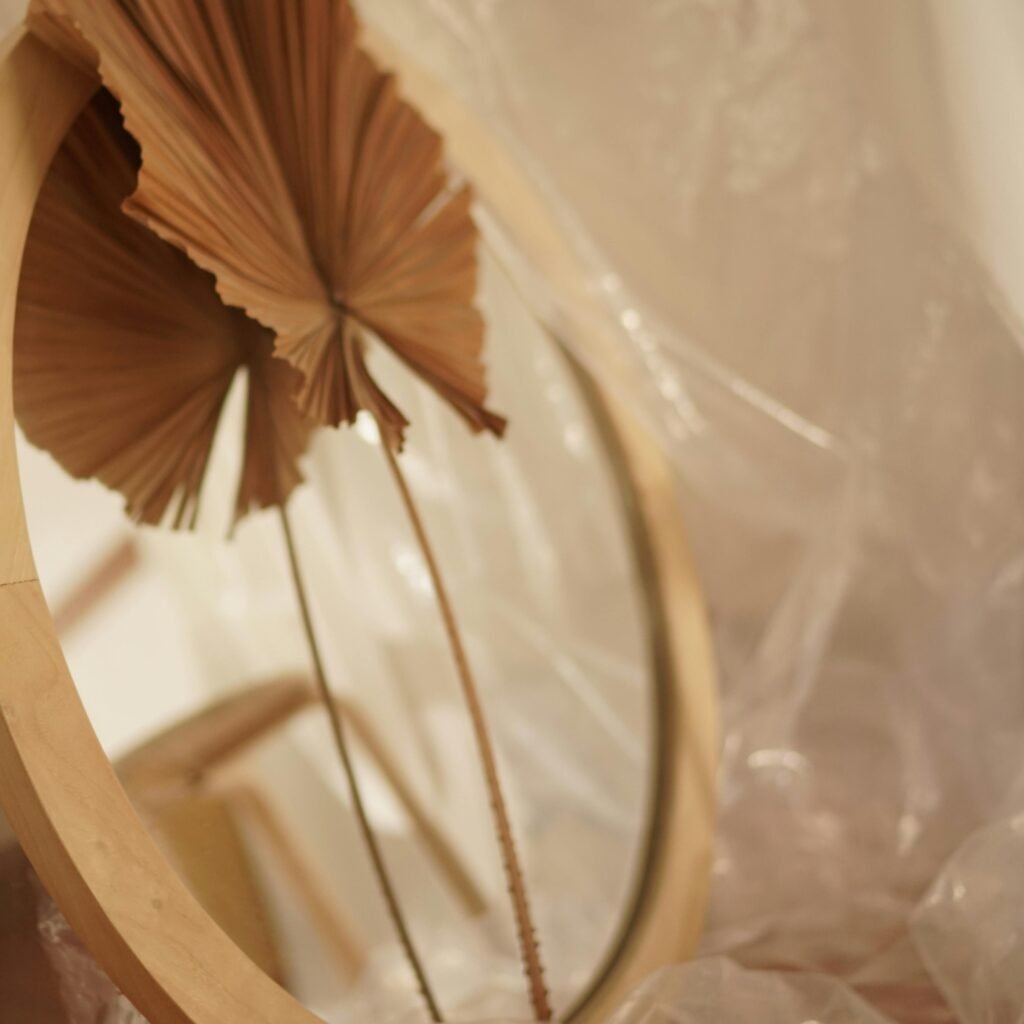
We have one of these at home, and it earns its place every day. A round mirror with a solid wood frame makes the space feel larger and brighter without demanding attention, and the wood softens what could otherwise feel clinical.
It’s probably the most straightforwardly “Japandi” item on this list, sitting equally comfortably in Japanese and Scandinavian-influenced spaces. Choose one where the grain is visible and honest. It should look like wood, not something pretending to be wood.
Kitchen & Dining
6. Mino-yaki Ceramic Plates
Mino-yaki comes from Gifu Prefecture — which happens to be where my father is from, so I may be slightly biased. That said, the numbers back me up: Gifu produces roughly half of all ceramics made in Japan, which tells you something about how central this region is to the country’s craft history.
Growing up, I associated Mino-yaki with the kind of quiet, unassuming tableware that older relatives used — nothing flashy. It took me until adulthood to properly appreciate what that restraint actually meant. These days, there’s a wave of more contemporary Mino-yaki designs that work just as well in a modern apartment as they do in a traditional setting. They aren’t trying to look Japanese. They just are.
7. Bamboo Serving Baskets
If you spend any time on Japanese cooking accounts on Instagram, you’ll notice this appearing constantly — and there’s a good reason for it. A bamboo strainer basket (take zaru) drains water from ingredients far more effectively than a metal colander, which means vegetables stay crisp and tofu doesn’t go soggy. It’s also naturally antibacterial, resistant to mould, lightweight, and durable.
The fact that it looks beautiful on a kitchen counter is almost incidental. You don’t even need to cook with it; a zaru piled with fruit or bread makes a kitchen feel considered without any effort. Trust me on this: look for ones with tight, even weaving rather than the loosely constructed versions that fall apart within a year.
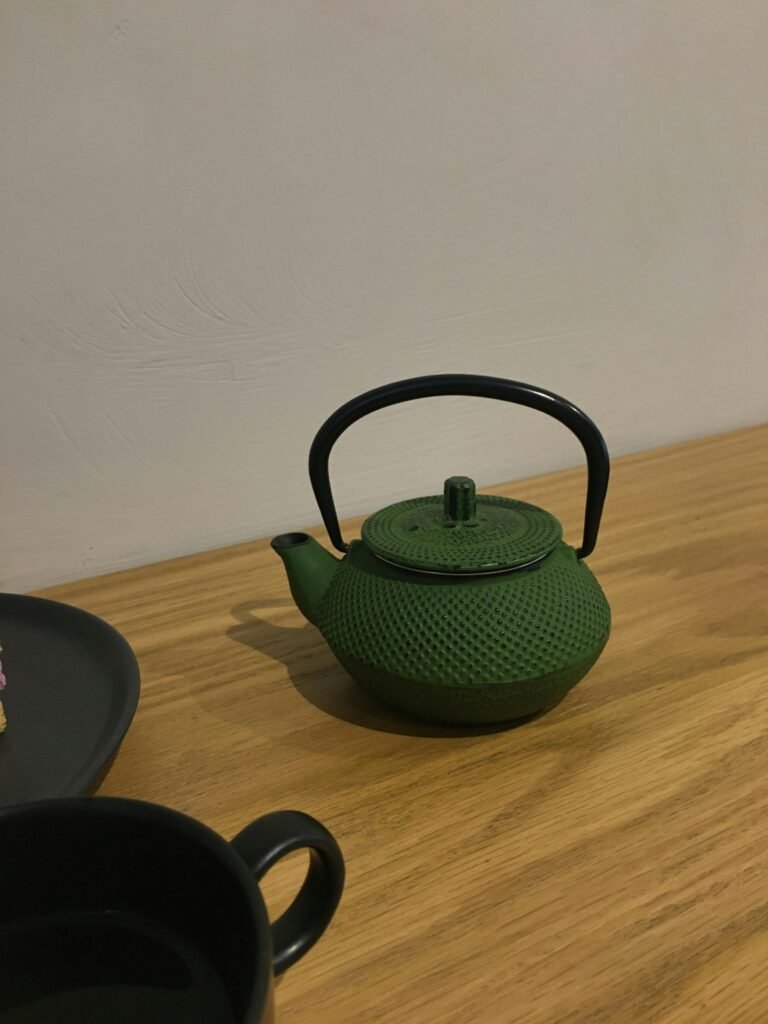
8. Nambu Iron Teapot (Tetsubin)
Every time I visit Japan, I look for one of these. And every time, I either can’t justify the price or can’t face fitting it into my luggage. It’s been on my wishlist for years.
Nambu ironware (Nambu tekki) comes from Iwate Prefecture and has been made there for around 400 years. A good tetsubin keeps tea hot for a long time, improves with use, and will almost certainly outlast everything else in your kitchen. If you’re in a position to buy one — and you don’t have to carry it home — I wouldn’t hesitate.
9. Lacquered Wooden Soup Bowls
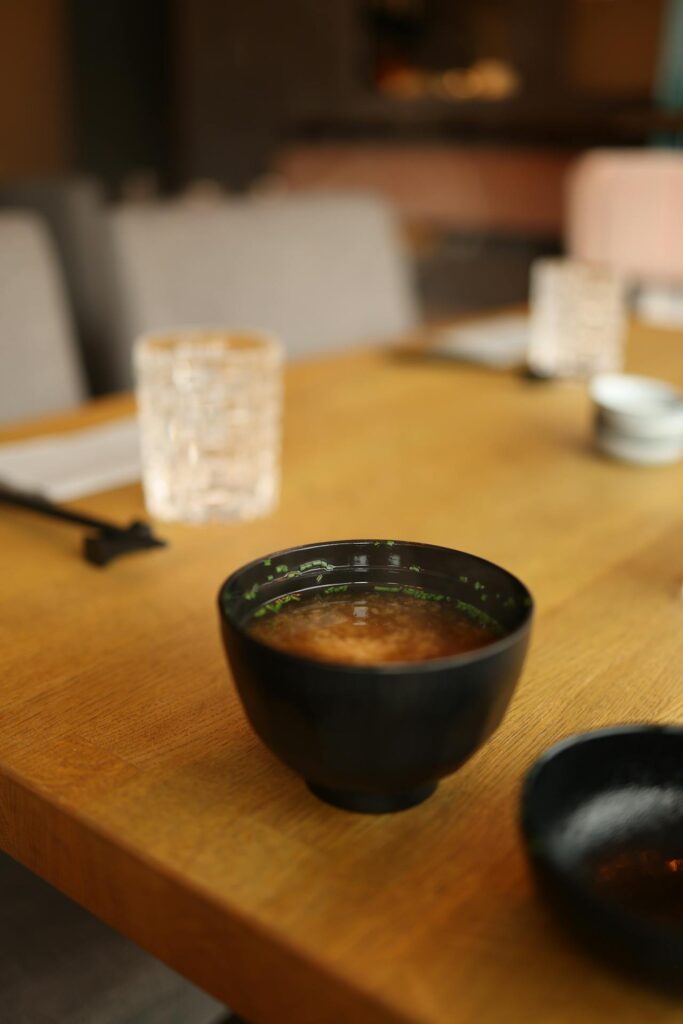
Moving to New Zealand taught me how much I’d taken these for granted. The problem with ceramic soup bowls is that you simply cannot hold them when the miso soup inside is freshly made. Lacquered wooden bowls are light, warm to hold, and insulating in a way that ceramic isn’t. They’re also quieter — no clinking.
Once you’ve used one, going back feels like a step in the wrong direction. Traditional lacquerware (urushi) involves a painstaking process of drying and polishing multiple layers. If you’re new to it, more affordable versions made with modern techniques are a perfectly reasonable starting point.
10. Hinoki Cutting Board
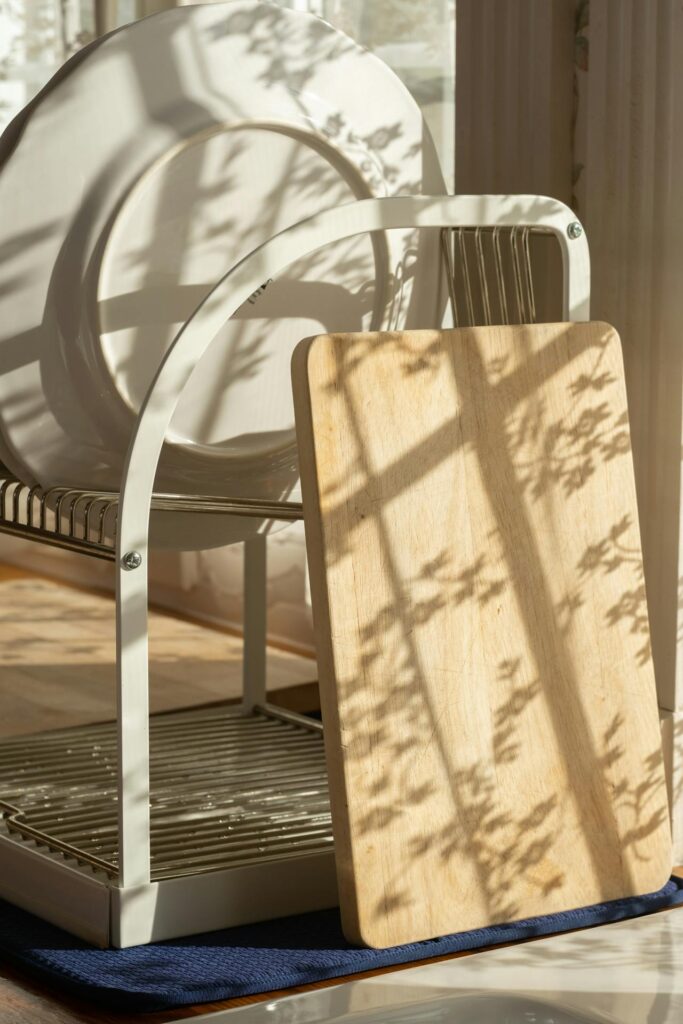
This was on my list for years before I finally bought one on my last trip back to Japan — and it’s one of the better purchases I’ve made. I use it almost every day, and there’s that faint, clean scent of hinoki cypress that I find genuinely calming.
The feel of it under a knife is different to plastic or bamboo: softer, more responsive. It needs a little maintenance — a light sanding every few months — but it rewards that care by lasting for years. It even doubles as a serving board. If you can only bring one thing back from Japan, this is a strong contender.
Where to Find Japandi Items Online
If you’re looking to source these, here are the names I trust:
1. MUJI
The most accessible starting point internationally. The basics are reliable and reasonably priced.
2. Nakagawa Masashichi
Excellent for traditional crafts adapted for modern living.
3. KORAI
Investment-quality contemporary lifestyle pieces.
4. Kinto
My go-to for functional, tactile tableware.
5. Rakuten
Great for finding pieces from smaller sellers you won’t see in international stores.
Finding Inspiration in Japanese Design Magazines
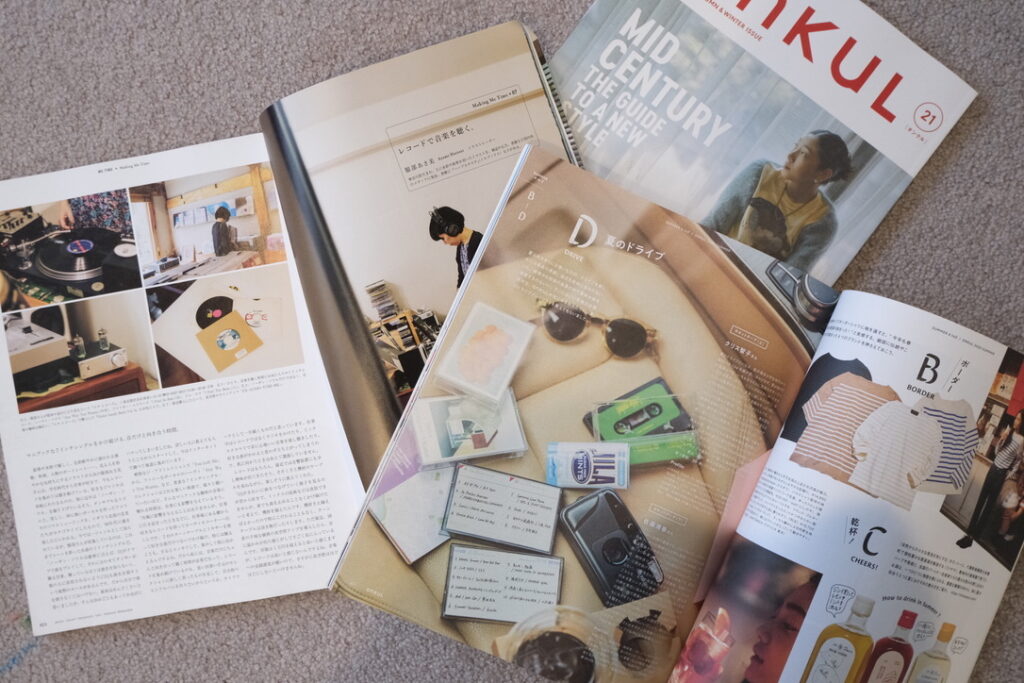
Even if you don’t read Japanese, I highly recommend picking up magazines like these. The visual language alone is an education in how to think about space.
For the Deeper Picture
If this list has made you curious about the ideas behind these objects — wabi-sabi, ma, or what Japanese minimalism actually means — the philosophy is worth understanding properly. It makes the objects more interesting, not less.
I’ve written more about What is Japanese Aesthetics? here.
I’m still building my own collection of “forever” objects, but each of these items — whether they’re already in my kitchen or still on my ‘one day’ list — has changed how I think about my home. I’ve found that when I know the story or the ‘why’ behind a design, the space starts to feel a lot more like me.
Bookmark this curated guide on Pinterest