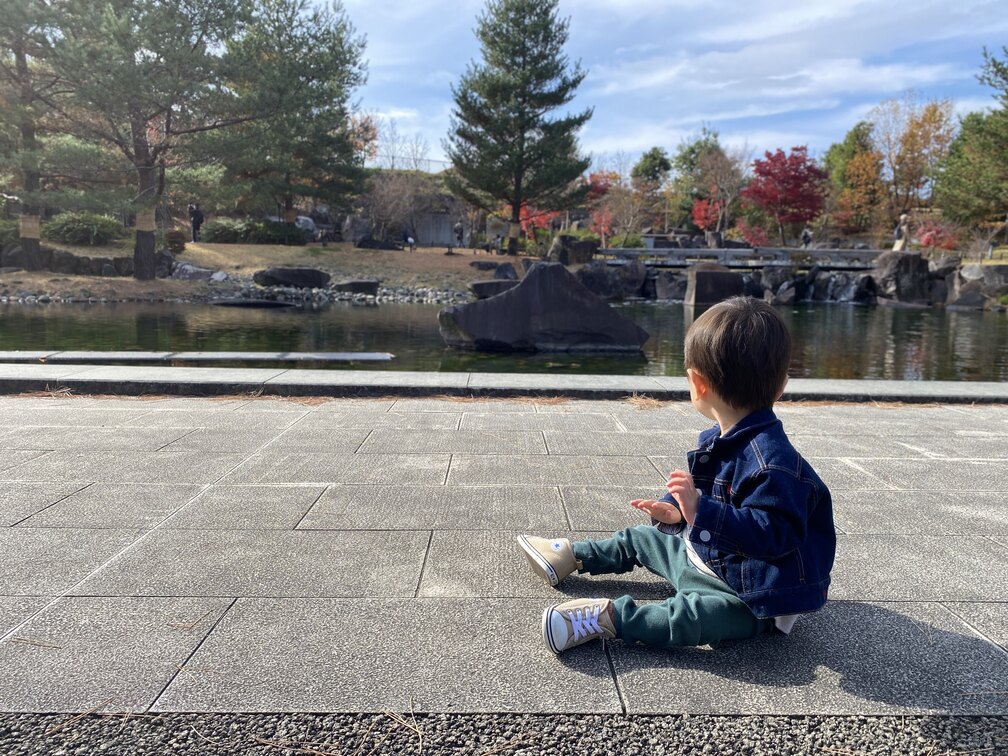
The first time I took my son to Japan, he was almost two years old. Eleven hours from Auckland to Tokyo. Eleven. Hours. And because my son was deep in the “no one but mummy” phase, I held him for the entire flight except for toilet breaks. I ate my meals one-handed whilst balancing a wriggling toddler on my lap, and every time I went to the toilet, I could hear him screaming his lungs out with my husband. Hands down the most exhausting flight of my life.
But you know what? The moment we landed, all that exhaustion melted into pure excitement and achievement. We made it!
Though I’d be lying if I said I wasn’t a bit nervous too. Because travelling from New Zealand to Japan with a toddler is like switching difficulty levels in a video game.
In NZ, if your toddler gets a bit loud at a cafe or wiggles around on the train, people generally just smile with a “Kids will be kids!” attitude. You don’t have to be hyper-vigilant about every little noise or movement your child makes, and you don’t stress much about other people’s babies or kids either. It’s just… relaxed. But Japan? Japan is all about order, harmony, and not causing trouble for others. The bar for “appropriate behaviour” feels so much higher. I grew up in Japan myself, but I’d never raised a child there. I braced myself for two months of constantly apologising and tiptoeing around social rules.
Turns out, I was half right and half wrong.
So here are five stories from our Japan adventure—for anyone planning a trip with little ones, curious about the parenting culture differences between NZ (or other countries) and Japan, or already raising kids in Japan (you legends, you!).
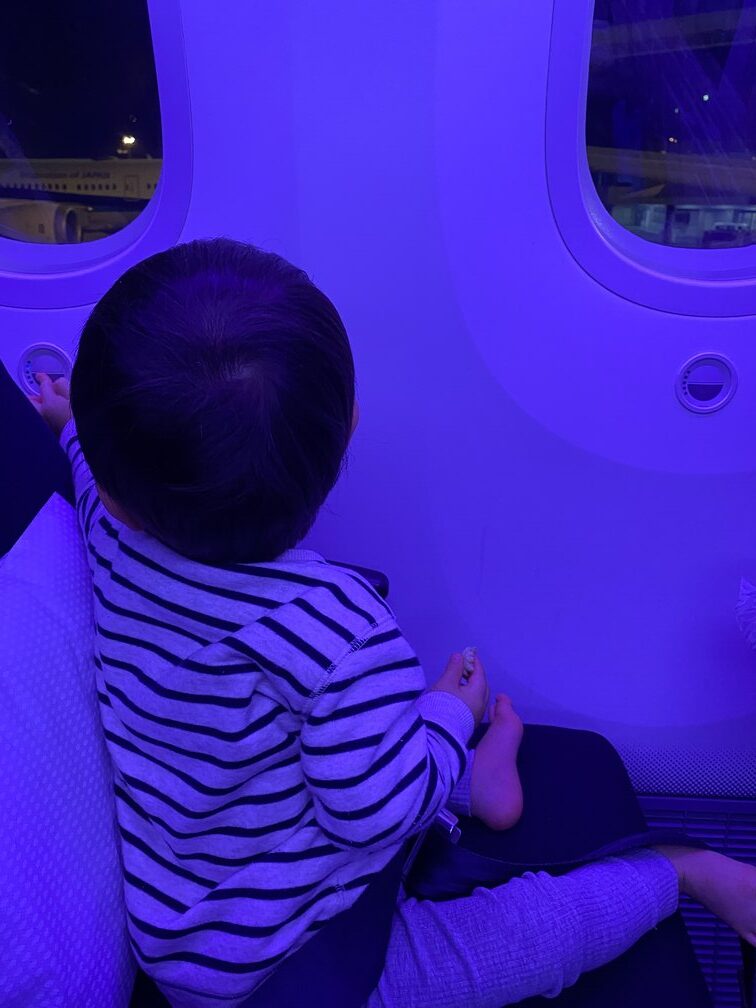
1. The In-Flight Meal Dilemma: Special Meals Are Your Secret Weapon
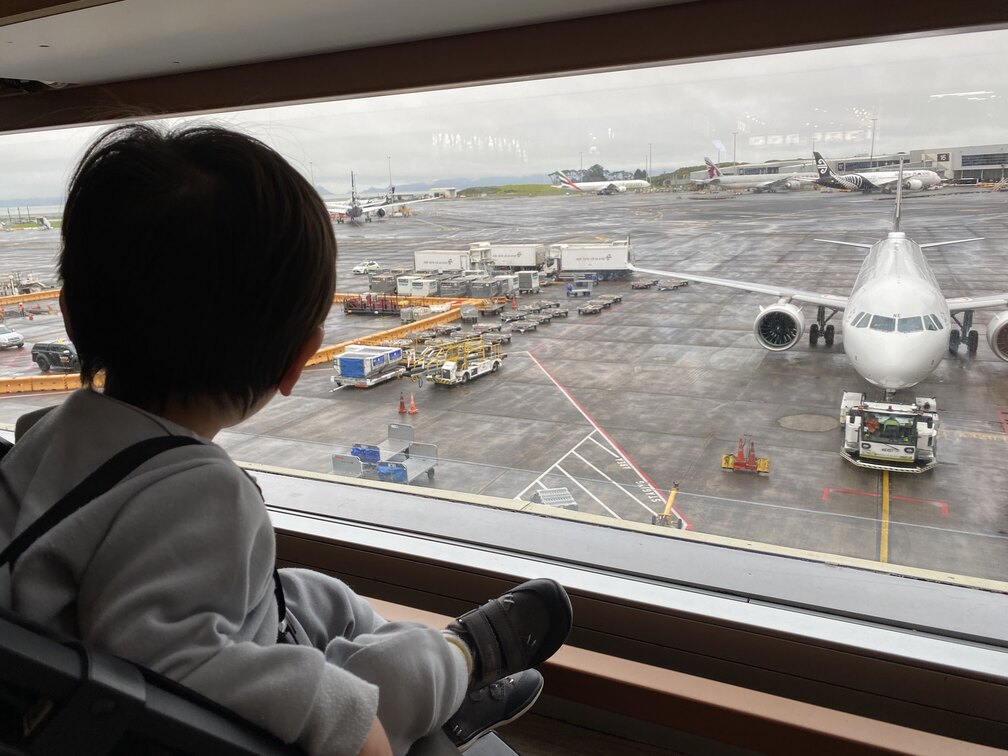
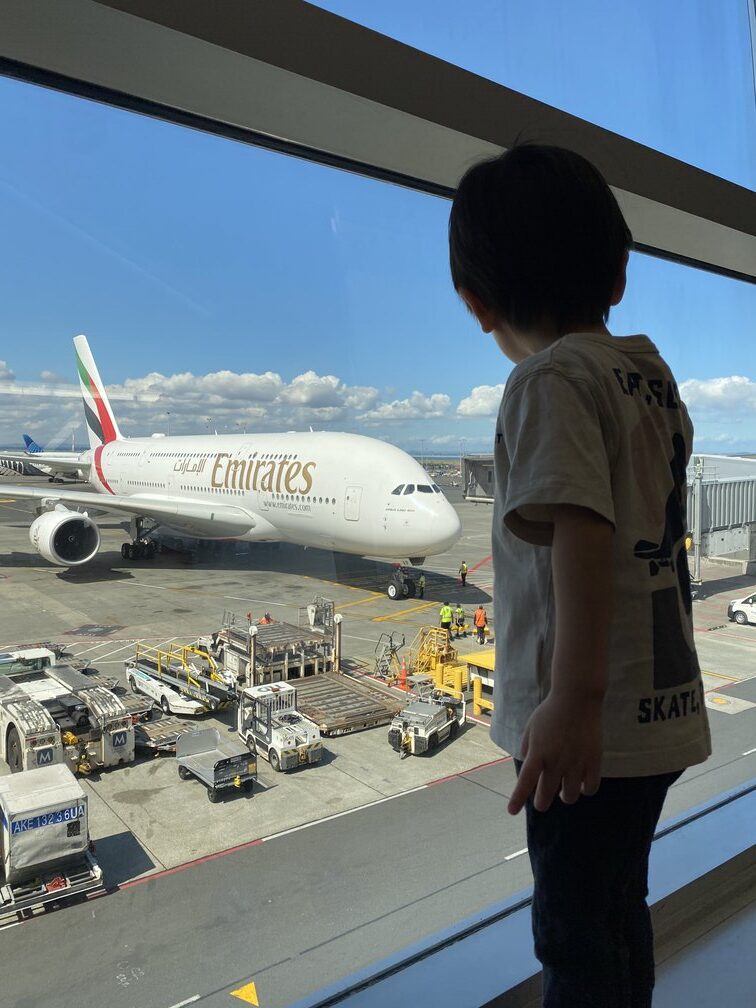
Long-haul flights with toddlers are brutal. If your child is under two, they’re basically glued to your lap the entire time (unless you can afford an extra seat—in which case, do it. Seriously. Do it).
The worst part? Meal time. Your child is on your lap. The meal arrives. You try to eat whilst simultaneously stopping your toddler from grabbing your fork. The flight attendant comes back to collect trays faster than you can say “I’m still eating.” And if you try to tag-team with your partner, you both end up shovelling food down like you’re in a competitive eating contest.
Then it hit me: Special meal orders are a game-changer.
Most airlines let you pre-order vegetarian, gluten-free, religious, or other special meals. But here’s the magic—special meals are delivered way before regular meals. Like, you can finish eating before the general meal service even reaches your row.
So now my husband orders the regular meal and I order vegetarian (which I actually prefer anyway). I eat whilst he watches our son, and by the time my husband’s meal arrives, I’m done and ready to take over. Since we switched to this system, meal times have become so much more manageable!
2. The Elevator Situation: Japanese Train Stations Are Basically Gyms
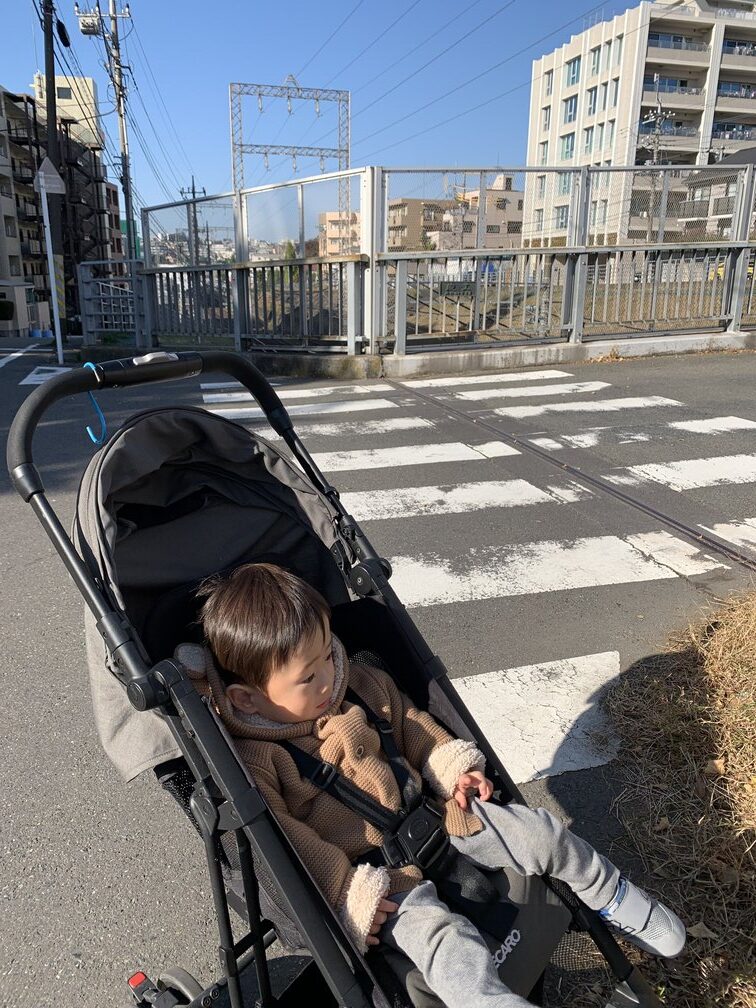
Right, we’ve landed in Japan! Our son still needed a pram, so we brought a compact, foldable one from NZ.
Back home, we drive everywhere, and shopping mall lifts are massive—you could fit three prams in there with room to spare. I’d never had a problem. I figured Japan would be similar. Maybe we’d struggle with space on trains or buses, but how hard could it be? Oh, sweet summer child.
First off, train station lifts are tiny. I’ll say it again for the people in the back: TINY. Department stores and big shopping centres are alright, but train stations? Absolute nightmare. Even at major stations, the lifts are shockingly small. If there’s another family with a pram, you’re basically playing Tetris to fit everyone in.
And the bigger the station in Tokyo, the more of an absolute maze it becomes trying to navigate from lift to lift to reach your exit.
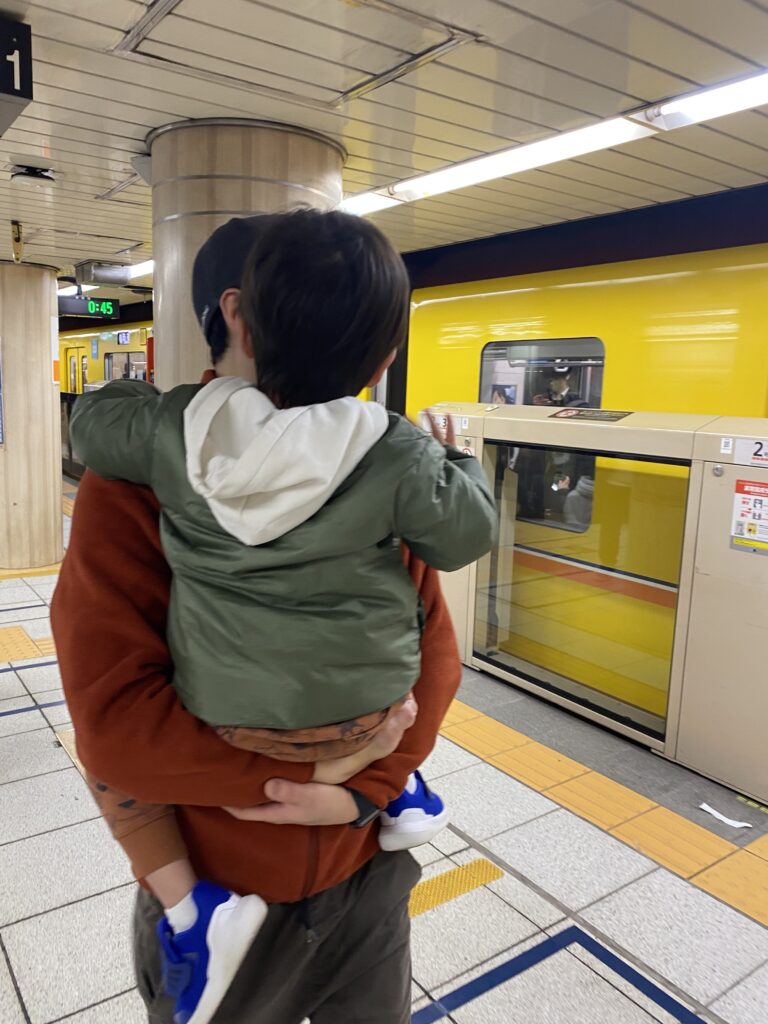
The worst experience was at Shinbashi Station when our son was four. We weren’t using the pram anymore, but we had two huge suitcases, two large duffel bags, and a four-year-old whose hand we needed to hold. We asked a lovely station guide for help, and she gently informed us that the most direct route to our hotel exit had—wait for it—no lifts or ramps.
Our options: Take the stairs (with all that luggage), or take a massive detour to find a lift.
My husband, ever the optimist, chose the stairs. Big mistake. HUGE. Never underestimate Tokyo station stairs. Long staircase. Reach the top. Another staircase appears. Repeat. Repeat again. After an hour on the train from Narita, we got an unexpected full-body workout just trying to exit the station. For us coming from NZ, it felt like some kind of urban survival challenge.
Oh, and one time when my son was still in the pram, my mum and I encountered a station in central Tokyo that had no lift at all. We had to carry the pram up and down the stairs between the ticket gates and the platform. In Tokyo. In 2022. Wild.
3. The Ramp Problem: “Accessible” Doesn’t Always Mean Accessible
Similar to the lift situation, finding ramps was like a treasure hunt. Stairs and escalators everywhere, but ramps? Good luck.
I mean, they exist. Technically. But you often have to go completely out of your way to find them. It’s “accessible”… if you don’t mind a ten-minute detour. And honestly, the people who need ramps are usually the ones who’d benefit most from the shortest route, right?
In NZ, it’s basically impossible to encounter stairs as your only option. Public spaces are generally accessible by default—whether you’ve got a pram, wheelchair, or suitcase, you can get around smoothly.
I never really noticed this when I lived in Japan, but once you’re pushing a pram or hauling luggage, the difference becomes glaringly obvious. It’s funny how perspective changes everything.
4. Public Transport: Quiet Carriages and Random Acts of Kindness
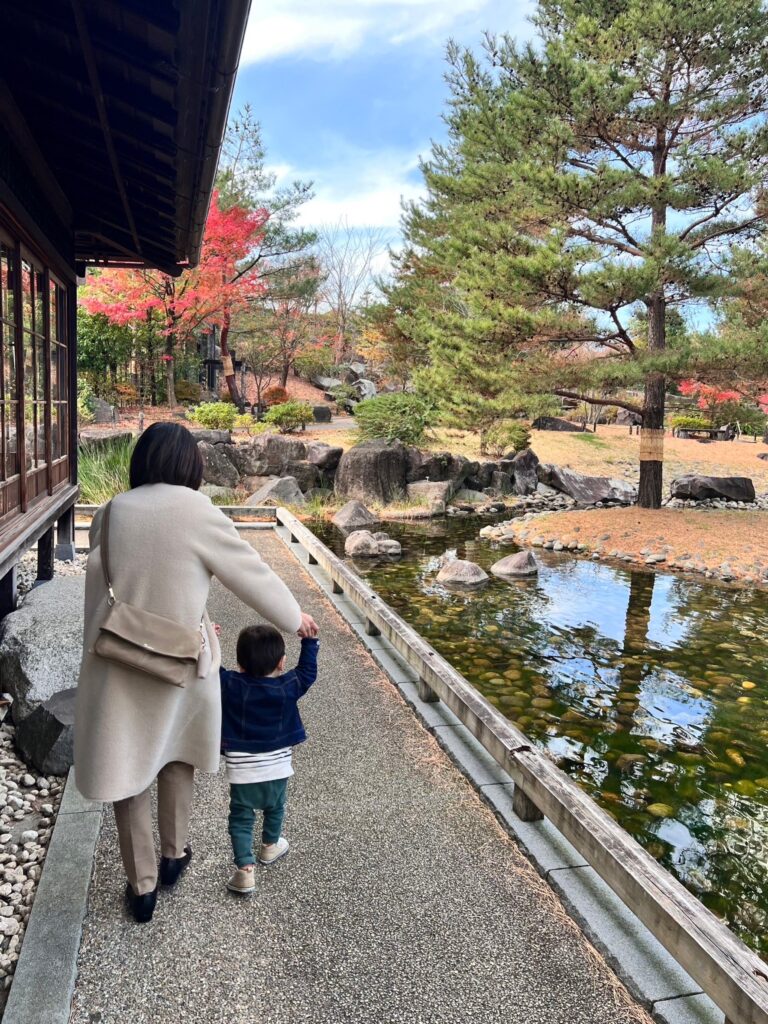
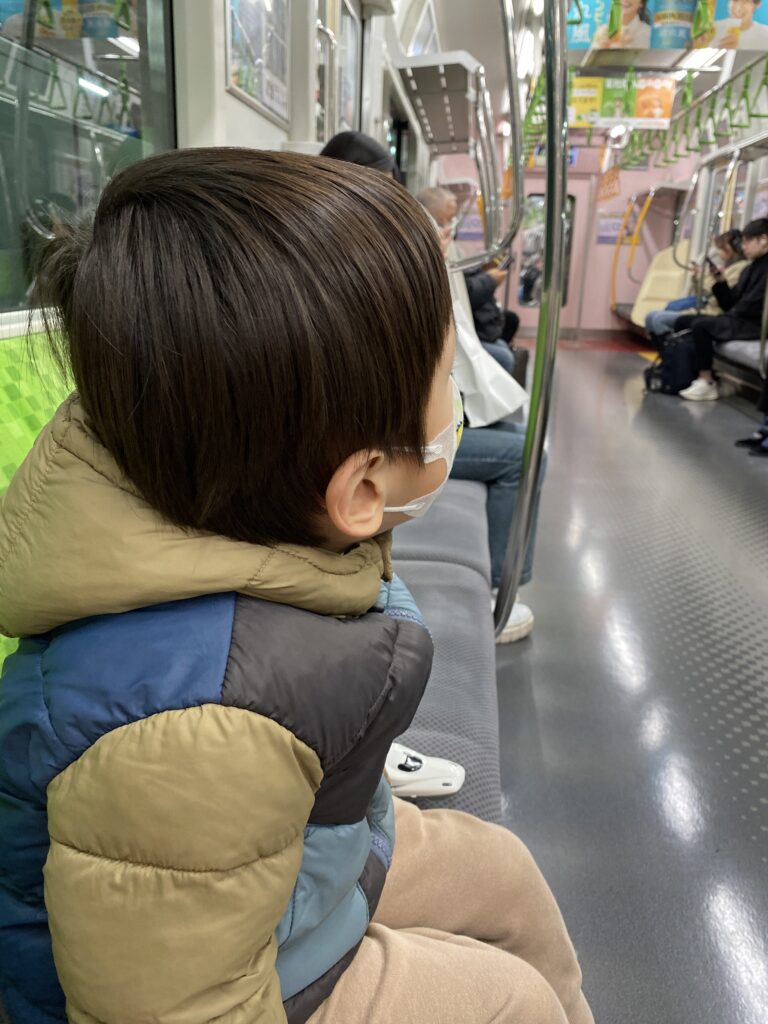
Everyone knows that Japanese trains and buses are silent. People don’t chat, and if they do, it’s in hushed tones.
NZ trains and buses are actually pretty quiet too—similar to Japan in that sense. You don’t see loads of people having loud conversations. But the difference is there’s no rule about it, and kids especially are given way more leeway. If a child makes noise, people just think “Kids, eh!” and carry on. But in Japan, I’d heard stories about children being given the death stare if they cried or got loud on public transport. I was honestly pretty nervous about it.
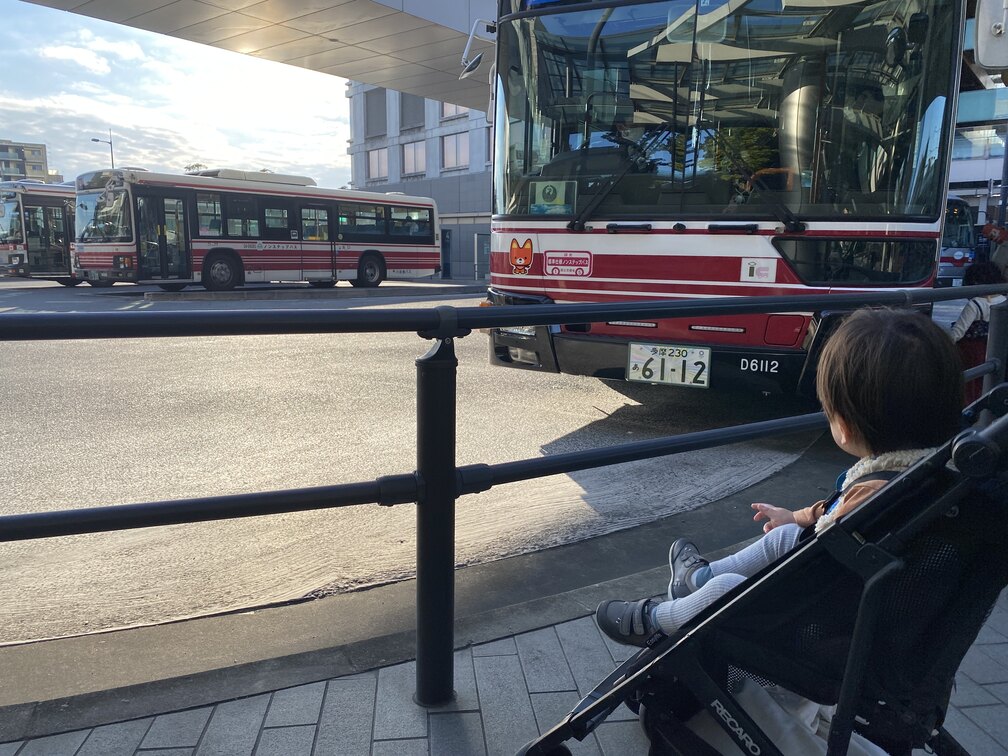
Luckily, we never had any truly negative experiences. There were minor annoyances—like people standing in the designated pram space and not moving even though they clearly saw us with a pram, or having to fold up the pram to board a bus (so tedious). But on the flip side, multiple times when we were standing on a crowded train, someone saw our son and offered us their seat. Those little moments of warmth really stood out.
Japanese “quiet culture” definitely made me a bit tense, but there’s genuine kindness and consideration underneath it all.
Oh, and here’s a fun bonus observation: I noticed a difference between Tokyo (Kanto region) and Osaka (Kansai region)—same country, totally different vibes! Kansai folks tend to be friendlier and more open, a bit more like what you’d find abroad. We got offered seats way more often in Kansai than in Kanto!
5. Free Toys at Restaurants: Japan’s Brilliant System
This might be uniquely Japanese, but I absolutely love it. You know that awkward waiting time at restaurants—between ordering and the food arriving, or after your kid finishes eating but you’re still working through your meal? That’s when toddlers get bored, and bored toddlers are chaos agents.
And here’s the thing about Japan: WiFi is surprisingly scarce. Even when a place claims to have it, it often doesn’t work or requires some complicated registration process. It’s the complete opposite of NZ, where pretty much every cafe has reliable WiFi. So the classic “just give them YouTube” strategy? Yeah, that doesn’t work in Japan. You actually need real entertainment solutions.
Enter: Free toys at family restaurants.
Granted, fewer places do this than they used to, but plenty of chain family restaurants and countryside spots with kids’ menus still hand out little toys or stickers. Last time we were in Japan, our son got freebies at a tonkatsu place in Tokyo, Ootoya (my absolute favourite teishoku chain—affordable, delicious, amazing for anyone who loves Japanese food), and a restaurant attached to an onsen in Wakayama. He was happily entertained, which meant we could actually enjoy our meal in peace.
NZ cafes and restaurants often provide colouring sheets and pencils for kids, and some even have shared toys in a play corner—which is brilliant in its own way. But Japan’s approach of giving each child their own little toy or sticker to take home? That’s a different kind of magic. Either way, anything that keeps toddlers occupied during a meal is a win in my book!
Final Thoughts: Embracing the Differences Makes the Journey Worthwhile
I won’t lie—there were moments during our trip when I thought, “Wow, this is tough.” Hunting for lifts, constantly worrying about disturbing people on trains, the shoulder tension from being perpetually on edge.
But at the same time, experiencing the differences between NZ and Japanese parenting culture firsthand was incredibly valuable. NZ’s laid-back approach and Japan’s attention to detail both have their merits. Noticing these differences made me reflect on what I’d always taken for granted.
And most importantly, being able to expose my son to both cultures feels like a gift. Teaching him “this is how we do things here” and watching him adapt so naturally—it’s a beautiful thing to witness as a parent.
Travelling to Japan with a toddler requires preparation and mental fortitude, but the discoveries, lessons, and laughs make it all worthwhile. The experience definitely changes depending on your child’s age, so I’ll be sharing a pre-schooler edition next—stay tuned!
I hope this gives you a bit of a heads-up if you’re planning a trip to Japan with little ones!